General information for NSW only, not legal, insurance or financial advice. Your strata plan, by-laws, leases and policy decide what applies to you.
On a warehouse, factory unit or retail strata building, the roof does more than keep the rain out. It protects tenants' stock and equipment, it affects insurance, and when it fails it can stop a business from trading. Yet roofs are often the last item on a commercial strata committee's agenda, until water comes through.
This guide covers how commercial strata roofs are usually managed in NSW, what safety documents to expect from contractors, and how to plan work so tenants can keep operating.
Who looks after a commercial strata roof?
Where the roof is common property, the owners corporation is generally responsible, the same as in a residential scheme. The Strata Schemes Management Act's duty to keep common property in good and serviceable repair is not limited to residential buildings.
Commercial and industrial plans can be set up differently, though. Some schemes give individual lots responsibility for parts of the roof through by-laws. Check the registered plan and by-laws before assuming who is responsible.
Between owners and their tenants, the lease decides. NSW Government guidance says tenants are generally responsible for non-structural repairs and landlords for structural repairs, but terms vary. Whether strata levies or capital costs can be passed on to a tenant also depends on the lease.
Build the roof into the capital works plan
Every NSW strata scheme must have a 10-year capital works fund plan that forecasts major repairs and their costs. A roof nearing the end of its life belongs in that plan well before it starts leaking.
A useful roof entry covers:
- the roof type and approximate age
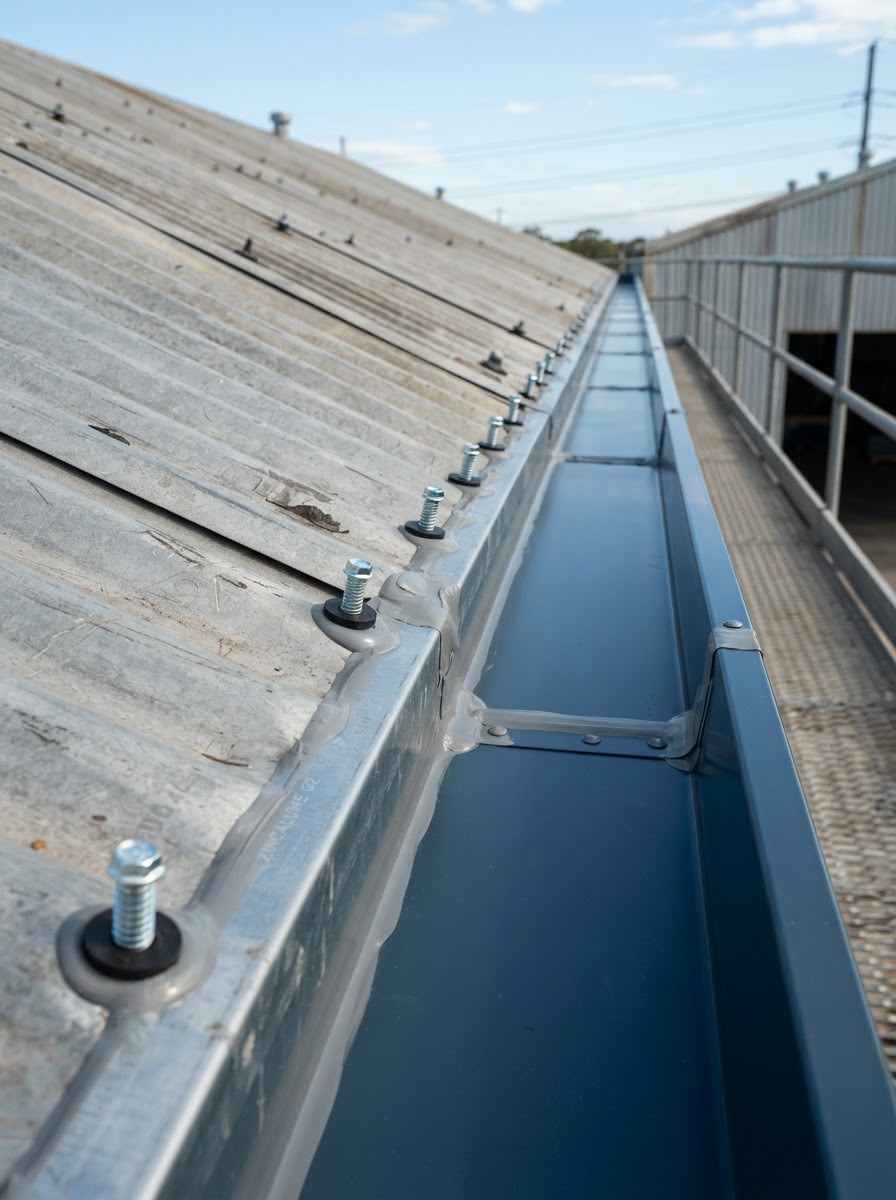
- known problem areas, such as box gutters, skylights, penetrations and flashings
- the condition at the last inspection, with dated photos
- the expected timing and budget for major work
This gives the committee a defensible basis for levies, and avoids the surprise special levy that follows a failed roof.
How often to inspect
As a general guide, we suggest a roof inspection at least once a year and after major storms. Roofs near trees, or with large box gutters, need more frequent checks because debris blocks drainage. Keep the reports with the scheme's records. Dated photos and invoices also help if an insurer later asks about the roof's condition before a claim.
Safety documents to ask for
Commercial roofs carry real fall risks, including skylights, translucent sheeting and fragile older materials. Before any contractor goes up, it is reasonable to ask for:
- a safe work method statement, which SafeWork NSW requires for construction work where a person could fall more than two metres
- current public liability and workers compensation certificates
- a fall protection plan, such as edge protection, mesh or scaffolding
- the controls for skylights and sheeting, which SafeWork NSW warns against walking on unless a competent person has assessed them as sound
Check the asbestos register first
SafeWork NSW says a workplace built before 31 December 2003, or where asbestos has been found, must keep an asbestos register. The duty sits with the person with management or control of the workplace. Your strata manager can confirm how this applies to common property.
A contractor should ask to see the register before starting. If the roof contains asbestos, licensed removalists are required: a Class A licence for any friable asbestos, and a Class B licence for more than 10 square metres of non-friable asbestos.
Mixed-use buildings need extra care
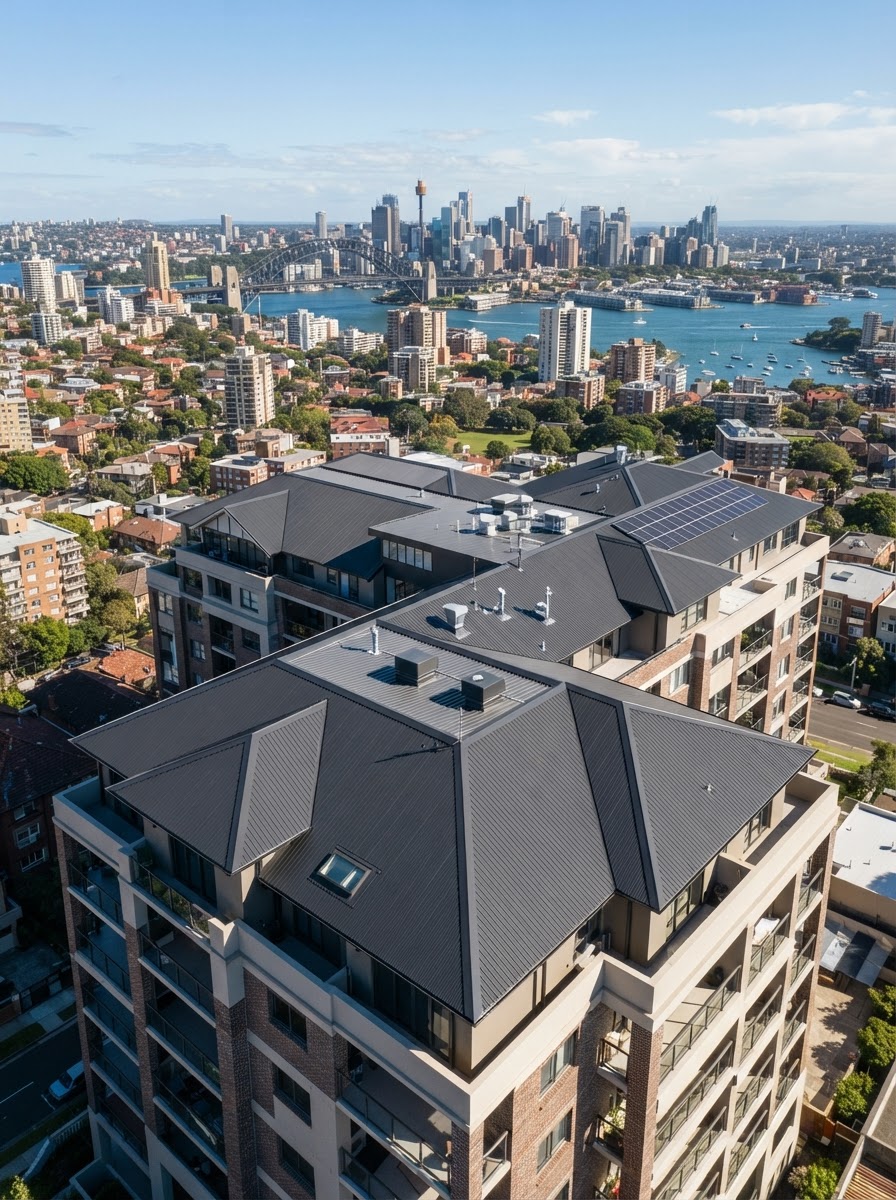
Where a building includes apartments, such as shops below residences, roof work can fall under the Design and Building Practitioners Act. NSW Government guidance says regulated designs are required for all parts of the building when work involves a building element or performance solution. Confirm this with a registered practitioner at scoping stage, before quotes are compared.
Keeping tenants operating
Most commercial roof work can be done without shutting a site down, if it is planned around operations. Good planning covers:
- loading zones and forklift movements under the work area
- overhead protection for people and stock below
- isolation of rooftop plant or solar where needed
- agreed work zones and times, shared with tenants before work starts
The strata manager is usually the right person to coordinate notices to tenants.
Quotes and approvals
NSW Fair Trading says all schemes must get at least two independent quotes for work valued at $30,000 or more, except for emergency repairs such as serious storm damage. By-laws may also set spending limits for the committee. Make sure quotes cover the same scope, so the committee is comparing like with like.
How Hiroof can help
Hiroof provides roof maintenance, repair and restoration for commercial, industrial and mixed-use strata properties across Sydney and surrounds. Where access is safe, we can inspect the roof, record its condition, quote the work and plan access around tenants where practical. Lease, funding and approval decisions stay with the owners corporation, owners and tenants.
To arrange a roof inspection, email info@hiroof.com.au. Hiroof Services Pty Ltd, NSW roof plumbing licence 21350703.